
How a project actually runs.
- Stages
- 4, in sequence
- Typical timeline
- 4 to 8 weeks
- Reviews
- At every stage
- Ownership
- Code and hosting are yours
Stage 1 of 4
Discover
Typically 3 to 5 days
Before anything gets designed we need to understand what the business actually needs the site to do. Not a workshop for its own sake, but a short, focused stage that prevents expensive changes later.
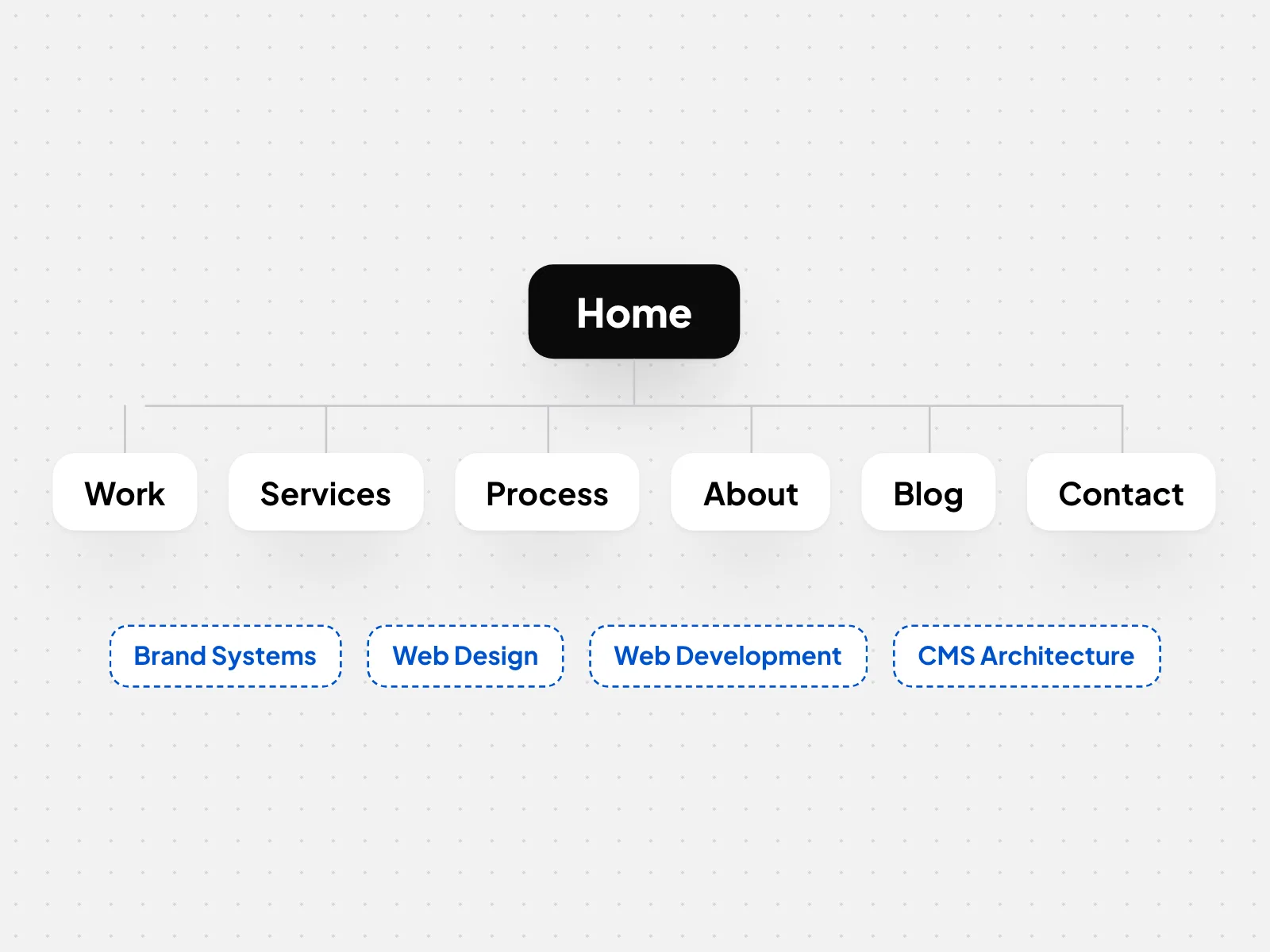
What we do
- Review your current site, analytics, and enquiry flow
- Clarify goals, audience, and what a win looks like
- Look at how competitors position themselves
- Agree scope, tiering, and the page list
What you get
- A written scope with an agreed page list
- A fixed quote
- A project timeline with review dates
From you
One conversation, access to any analytics you have, and an honest account of what is not working today.
Stage 2 of 4
Structure
Typically 3 to 5 days
The stage most agencies skip. We decide what goes on each page and in what order before worrying about how it looks, because layout decisions made without a content plan get redone.
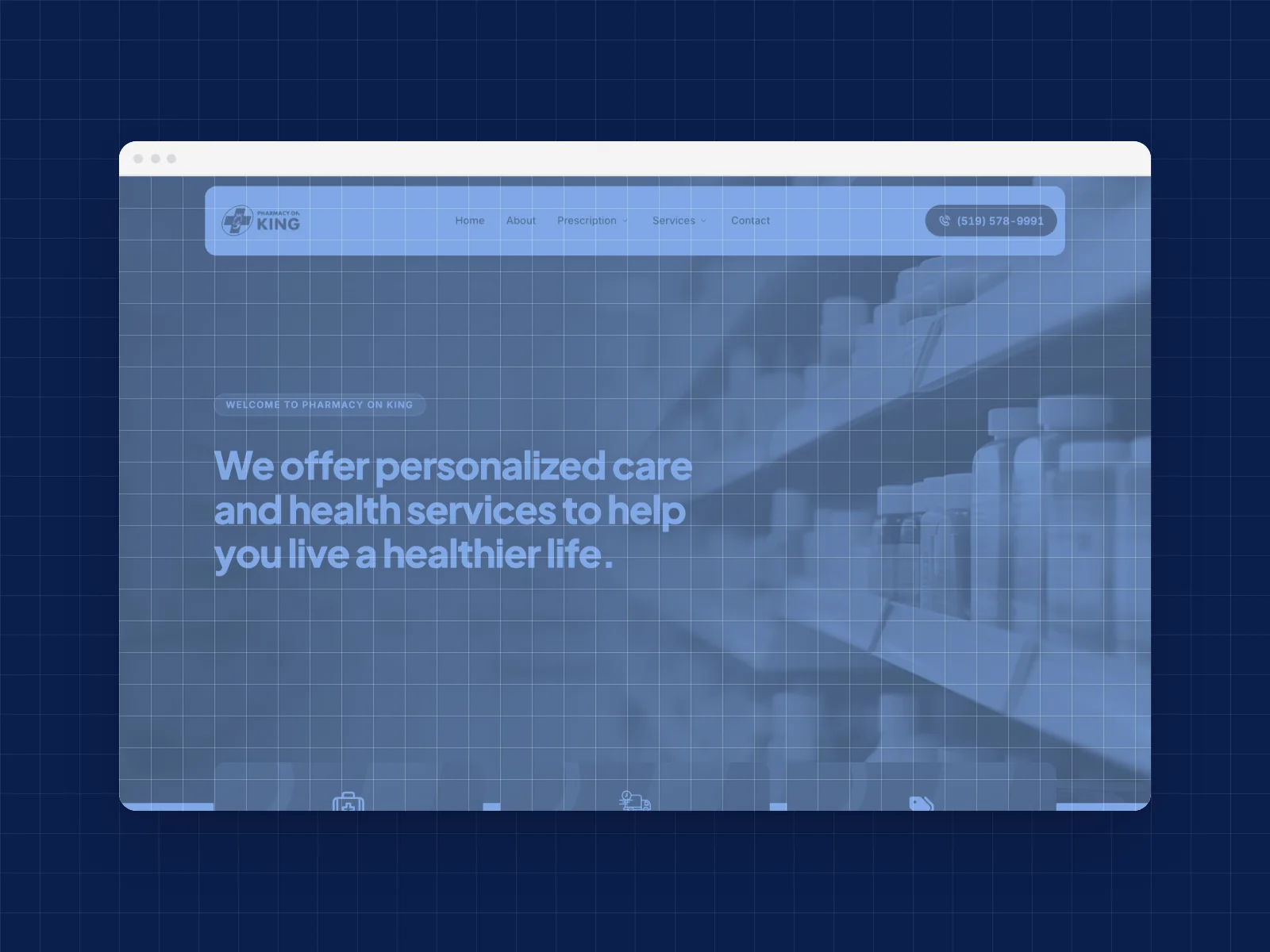
What we do
- Map the site architecture and navigation
- Wireframe each key page
- Design the content model the CMS will use
- Identify content you need to write or supply
What you get
- Sitemap and navigation structure
- Wireframes for every key page
- A content checklist with owners
From you
Feedback on the wireframes, and a decision on who is writing the copy: you, us, or both.
Stage 3 of 4
Design
Typically 1 to 3 weeks
Now it looks like something. You see high-fidelity designs and click through a real prototype before a line of production code is written. Nothing gets built that you have not approved.
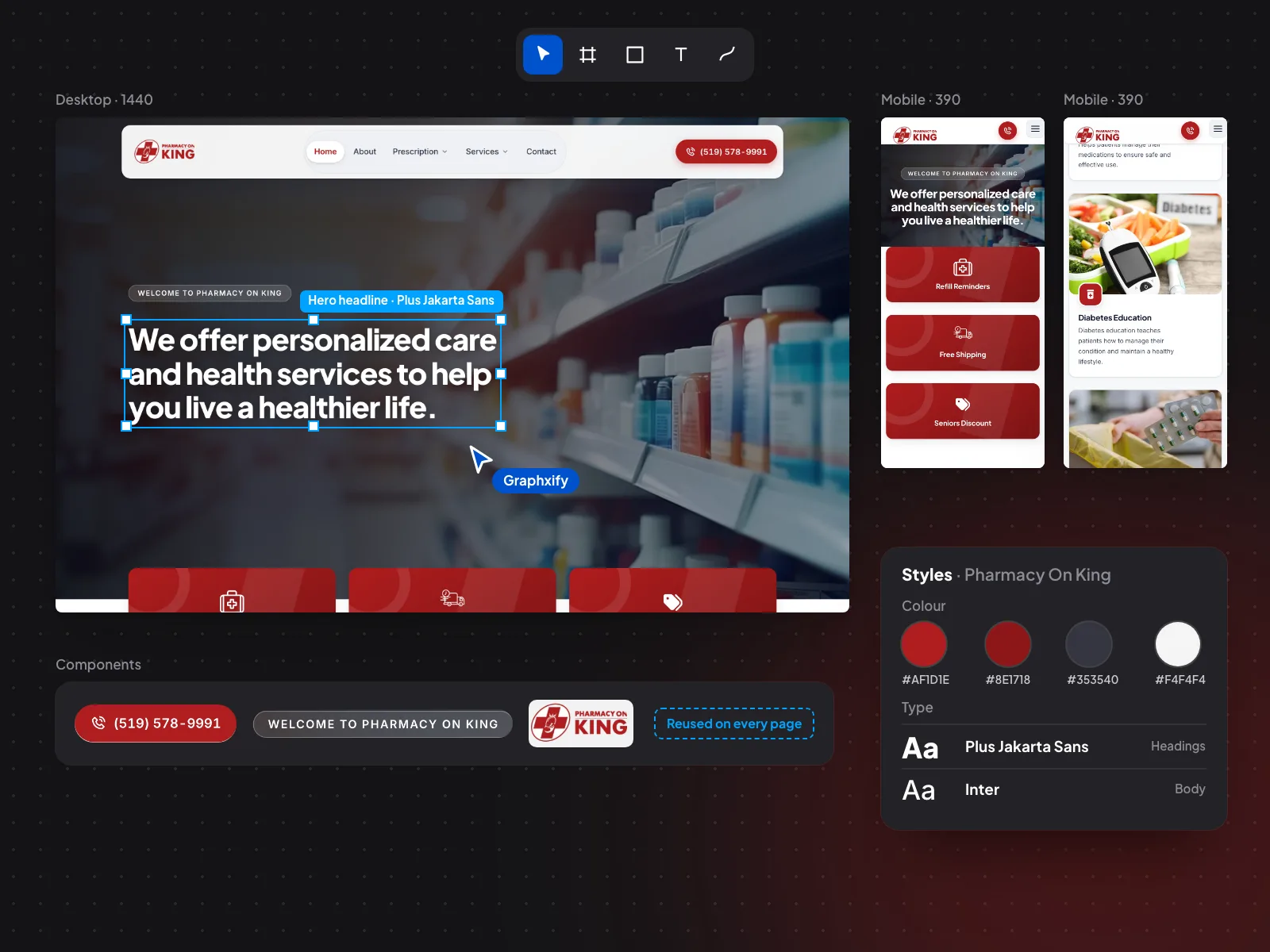
What we do
- Design desktop and mobile for every page
- Build a reusable component system
- Assemble an interactive prototype
- Run an accessibility review against WCAG guidelines
What you get
- High-fidelity designs, desktop and mobile
- A clickable prototype
- A component design system
From you
Consolidated feedback at each review. One round of collected comments beats five separate messages.
Stage 4 of 4
Build & Ship
Typically 2 to 4 weeks
Custom Next.js development, tested across real devices, then deployed to your own hosting account with the CMS configured and your team trained on it.
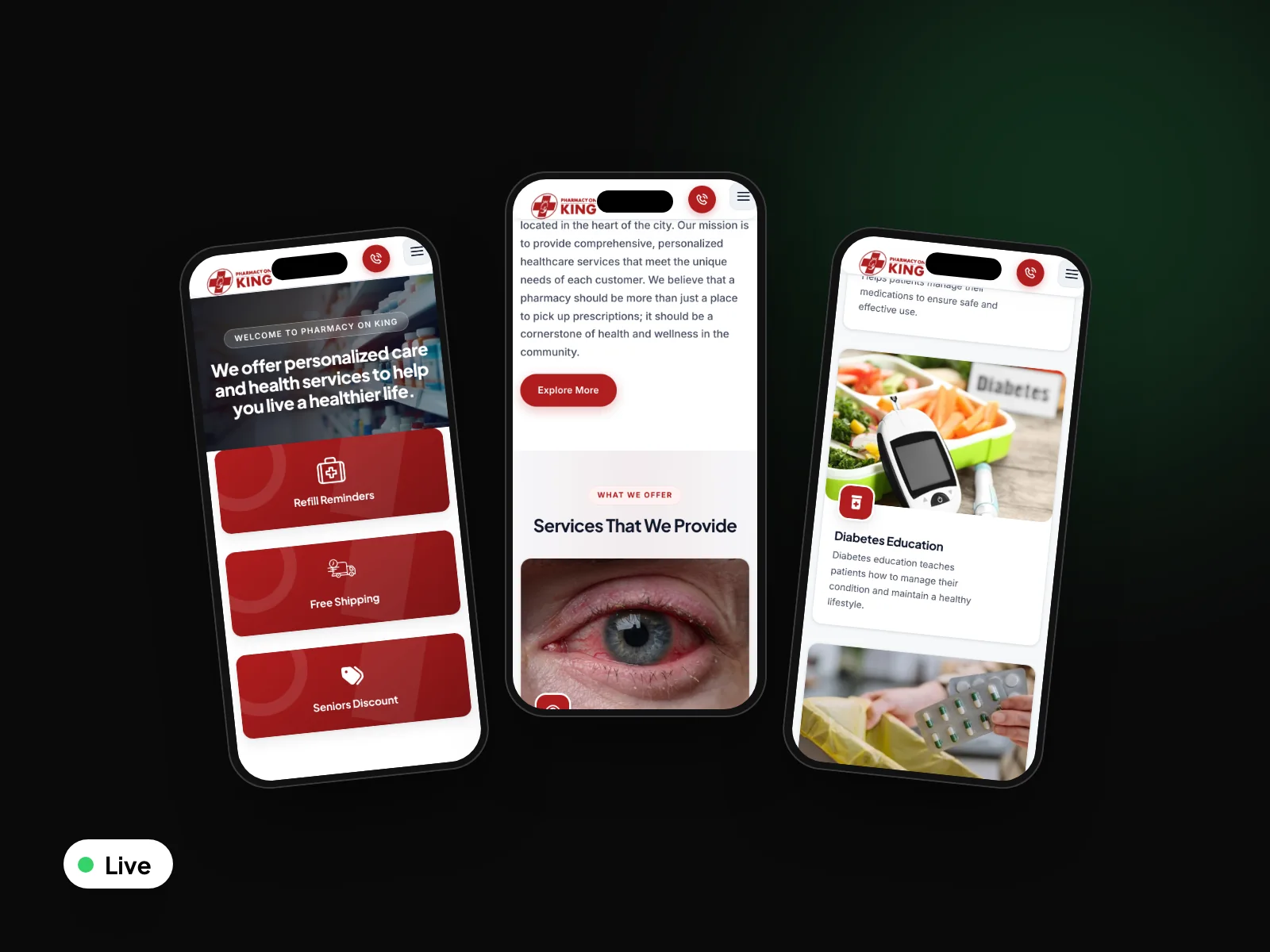
What we do
- Build the approved designs in Next.js
- Configure the CMS, roles, and workflows
- Test performance, accessibility, and cross-device behaviour
- Migrate content and set up redirects to protect rankings
What you get
- A live site on hosting you own
- The full codebase, yours outright
- Editor training guide and handover session
From you
Final content sign-off, and domain or hosting access when it is time to go live.
What makes projects run late.
Timelines slip for a small number of predictable reasons, and almost all of them are avoidable if both sides know about them at the start. So here they are.
Content that is not ready
By a wide margin the most common cause of delay. A project waiting on copy cannot move, no matter how much design is finished.
Feedback arriving in pieces
Scattered comments over two weeks cost far more than one consolidated round. We build review dates into the timeline for this reason.
Scope added mid-build
New pages or features are fine, but they are quoted and scheduled rather than absorbed silently. You will always know the cost before we proceed.
Approvals with no clear owner
Projects run fastest when one person can make the final call. Design by committee is the slowest possible route to a website.
Common questions.
How long does a whole project take?
How much of my time will this take?
What if I don't like the design?
Do you work in sprints or all at once?
What happens after launch?
Want to see the output?Browse the work
Ready to build something you're proud of?
Tell us what you're working on. We reply within 24 hours with clear next steps. No jargon, no pressure.
info@graphxify.com